Best VPNs in the USA: Ranked Picks for Privacy, Speed, and Streaming
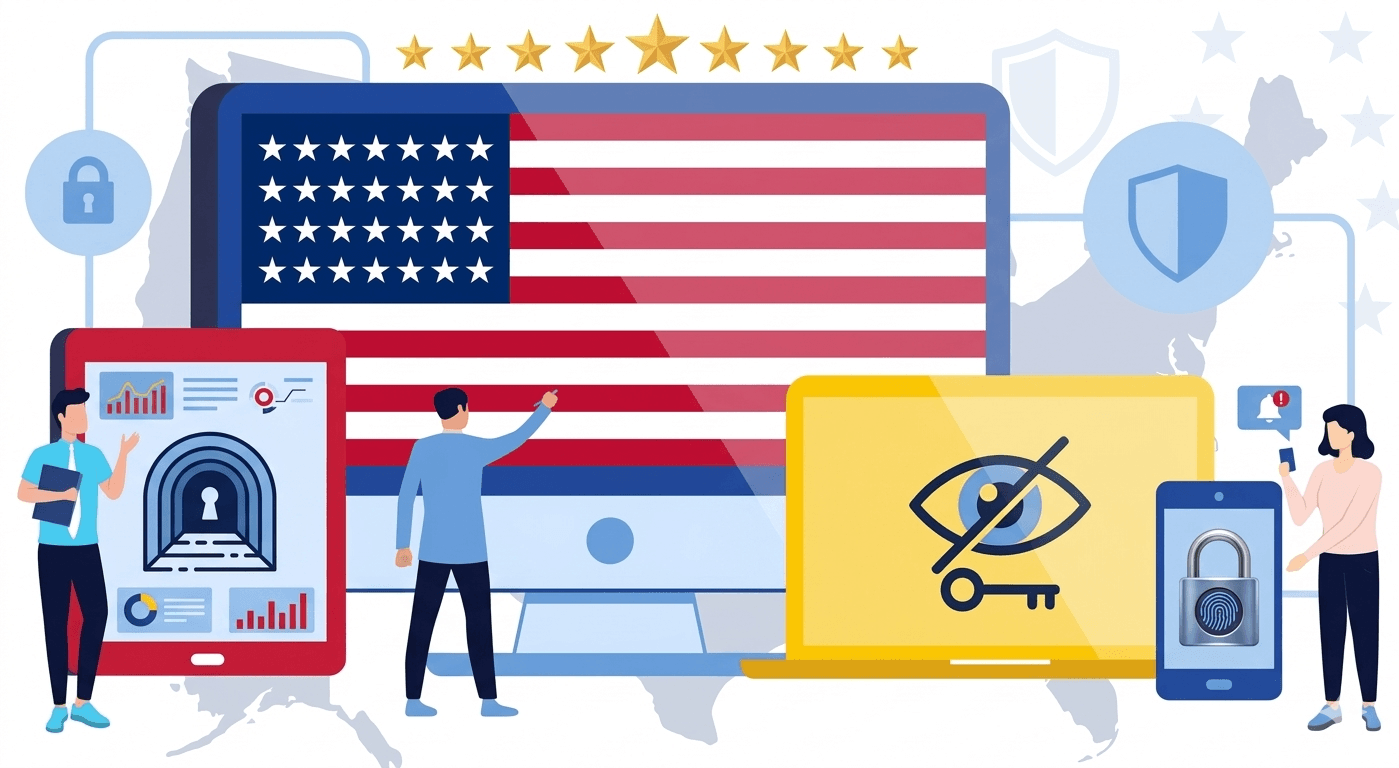
If you are searching for the best VPN in the USA, start with providers that balance privacy, leak protection, speed, US server consistency, and refund terms you can actually test.
This page is built for fast comparison. You get ranked scorecards, practical strengths, and direct links to each VPN so you can compare the best VPNs in the USA quickly and move forward with a provider that fits your real use case.
High-grade encryption keys help protect your privacy
Fast server speeds with no strict bandwidth caps
Browse in the USA with stronger identity shielding
Compare top VPN deals and test free-trial offers
Available on:
Last updated: Apr 6, 2026Advertising disclosure: Some links are affiliate links.
1Top overall
NordVPN
Premium speeds, strong privacy, and reliable streaming.
Best all-around balance of speed, privacy, and reliability.
Fast server performance for daily browsing and streaming
No-logs approach with modern privacy controls
Kill switch and leak-defense features enabled by default
Strong app quality across desktop and mobile platforms
Consistent performance for travel and public Wi-Fi
What matters most if you are choosing the best VPN in the USA
The strongest US VPN picks are not just about raw speed. They need stable local coverage, consistent streaming performance, safer public Wi-Fi protection, and refund terms that give you time to test on your own network.
Streaming and live sports
US users usually care about reliable access, nearby city coverage, and enough speed for HD or 4K playback.
Look for stable server switching, low evening slowdowns, and a refund window long enough to test your favorite platforms.
Travel and public Wi-Fi
Airport, hotel, cafe, and campus networks are common reasons to turn a VPN on in the first place.
A practical VPN for the US should connect quickly, keep leaks blocked, and stay usable across phone, laptop, and tablet.
Privacy and audit signals
Marketing claims are easy. Independent no-logs checks, modern protocols, and leak controls are harder to fake.
We give more weight to providers that combine strong default settings with a clearer privacy track record.
Price, value, and refund terms
Cheap pricing only matters if the provider still performs well on your real network and devices.
Longer refund windows and low-friction support make it easier to test safely before committing.
Quick picks by US use case
If you do not want to compare every card above, start with the provider that best matches your main goal and then read the full review.
Best all-round pick
NordVPN
Best fit when you want one service that handles privacy, speed, streaming, and travel without much compromise.
We prioritize real-world reliability: stable speed, leak resistance, privacy posture, app quality, and everyday usability for US users. Price matters, but only after security, consistency, and common US use cases like streaming, travel, and public Wi-Fi are validated.
Still confused about VPNs? Don’t worry, we’ve got your back.
Why do I need a VPN?
A VPN helps protect your privacy with stronger encryption, secures your traffic on public Wi-Fi, and reduces direct exposure of your visible IP to third parties. It is a practical privacy layer for browsing, travel, remote work, and everyday account protection.
How do I use a VPN?
Install the VPN app, sign in, choose a server, and connect. After that, verify the setup by checking your public IP and running DNS, WebRTC, and IPv6 leak tests. If those checks are clean, your VPN routing is working correctly.
Will using a VPN affect my internet speed?
A VPN can reduce speed slightly because traffic is encrypted and routed through an extra server hop. With quality providers and a nearby healthy server, the difference is usually small and still fast enough for browsing, streaming, and video calls.
Are VPNs secure?
VPNs are secure when the provider offers modern encryption, leak protection, a kill switch, and a clear no-logs posture. A VPN improves network privacy, but it should be combined with strong passwords, updated devices, and safe browsing habits.
Should I use a free VPN or a paid VPN?
Free VPNs can be useful for quick testing, but they often include limits on speed, bandwidth, or locations. Paid VPNs usually deliver better consistency, broader server coverage, stronger performance, and more reliable support for daily use.
How do I verify that my VPN is actually working?
Do not rely only on the app status. Confirm your public IP changes after connecting, then run DNS, WebRTC, and IPv6 leak tests. A VPN is working correctly when your route changes and leak checks do not expose your baseline connection.